
06 Jun 2015
Tbilisi II - Visa-troubles and David Gareja
The articles here are still almost a month behind my actual itinerary. Normally I would deal with the mounting feeling of guilt by taking a nap and then using the boost of energy to clean the kitchen or look up cat videos on Youtube.
Unfortunately the nap is out of the question: It’s impossible to find a sleeping position in which my lobstered skin doesn’t cause me to suffer dreams of hellfire, father-of-the-year King Stannis or the Vietnam war. Turns out, the colour of your skin can cause lots of problems. Who knew?
In the absence of decent excuses I’m now sitting in the living room, not-sipping my not-coffee (because Ramadan). As its rich, smokey flavour not-fills my mouth, I’m thinking that I might as well get on with the writing.
In Tbilisi I ended up spending little time on sightseeing, but rather more on socializing. My theory is that any person troubled by shyness or lack of friends should grab a bag, book a ticket and find themselves some nice hostels to stay in. Hostels are full of people with the strangest background and experiences! Most of them tend to actively look for other people to hang out with. That relative abundance of social interaction also puts any fears of blunders or awkwardness in perspective: So what, you’ll never see those people again - unless you want to.
In a way, that’s what the choice between hotels and hostels comes down to: Would you rather talk to waiters and room service or other travelers?
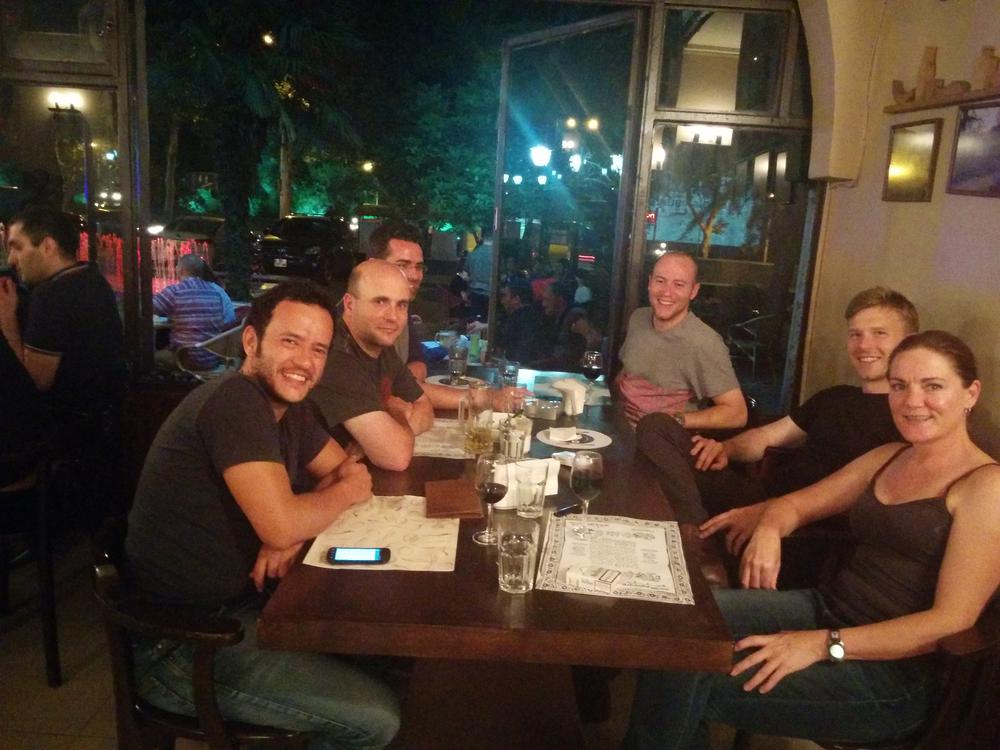
Airport? No.
Between the meals and nights out, I managed to clarify the situation regarding my visa for Iran. Clarify that I wasn’t going to get one, that is. My initial plan had been to fly into Teheran, spend two weeks roaming around Iran and then flying out to Bahrain. This actually sounded like a really good plan because of Iran’s Visa-on-arrival service, which allows citizens of some countries to just pick up a visa at the airport. Being lazy but cautious I decided to ask about that at the embass before booking my flight.
The first attempt, I walked to the embassy (for about 90 minutes). Unfortunately, the place had closed down 10 minutes before I reached it. The opening hours listed on the website were out of date, apparently.
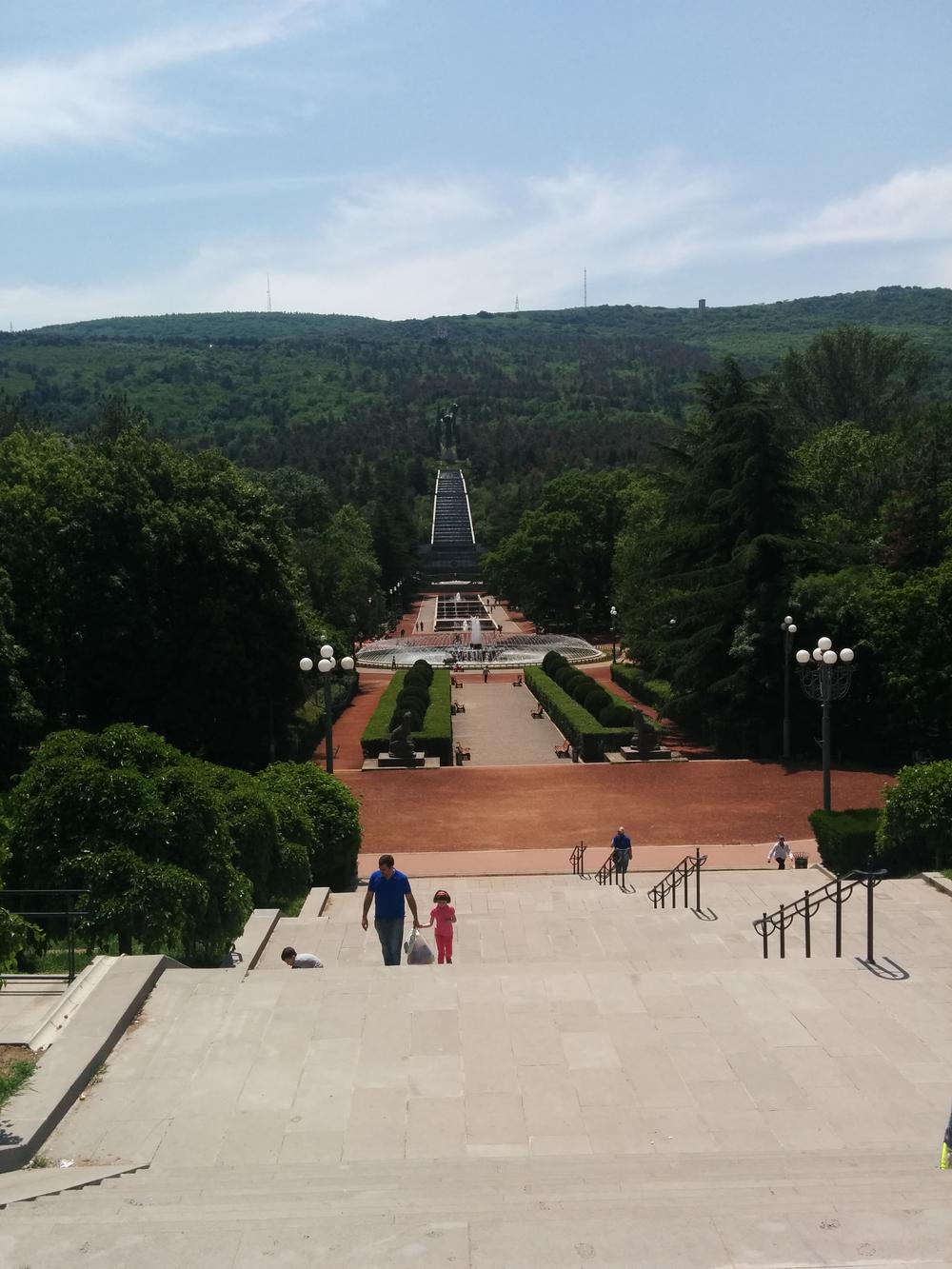
Vake Park, which I found along the way
The second attempt, I reached the embassy early and was admitted in, together with a couple from Poland. It was their second visit to the embassy, and the looks on their faces didn’t exactly inspire confidence. Sure enough, we were met by a almost-certainly-competent embassy official. I could elaborate on the specifics, but I fear that it might jeopardize my chances of getting a visa in the future. Suffice to say that he eloquently answered our initial question in one sentence: “… … … …airport? … … … no.” He really stuck to his guns and used the same sentence to answer all of our follow-up questions, too. Instead, he helpfully directed us towards a visa service agency, which would apply for a regular visa on our behalf, for around 200 USD. That would take around 2 weeks. For me, this meant I simply was not going to go to Iran: If I had to wait for two weeks to get a visa, I would only have around 5 days to spend in Iran before meeting my friend in Bahrain. 200 USD (visa) + ~200 USD (flight) / 5 days = 80 USD/day just to get into the country.
Now I had met other travelers (tourists!) who had gotten into Iran on those airport visas very recently, no problem. Plus, all Iranian government websites stated the Visa-on-Arrival was still an option. So technically, I could have just booked my ticket and hoped for the best. However, this meant running the risk of being rejected at the airport and then being forced to book a pricy flight out on the spot. I decided to trust the charming man from the embassy and leave my Iran visit for another journey.
David Gareja
With that sorted, I decided to explore the Tbilisi area some more. Luckily, I had met some interesting people at the hostel before (Hi, Rene!) and we decided to do a day-trip to the David Gareja monastery right on the Georgian-Azerbaijani border. The orthodox monastery was founded in the 6th century and consists of dozens of chapels, caves and buildings. Today, the area is the object of a border dispute between Georgia and Azerbaijan.
We picked a tour operator near Liberty Square and were directed to a waiting car. It must have been a slow day, because it was only the two of us, an Italian guy and an Austrian lady, and the driver. He would drive us to the monastery, we would complete a short hike there and then be driven back. Luckily, our driver was very accommodating of our tourist-y desire to take pictures of…everything and stopped frequently along the way.
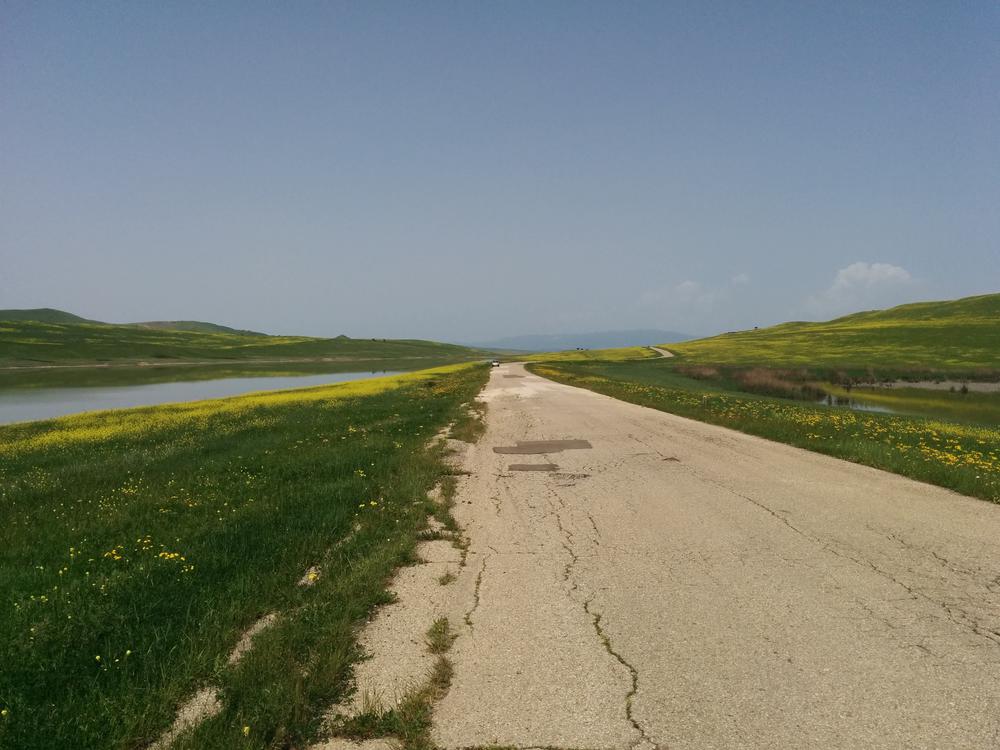
Endless landscapes
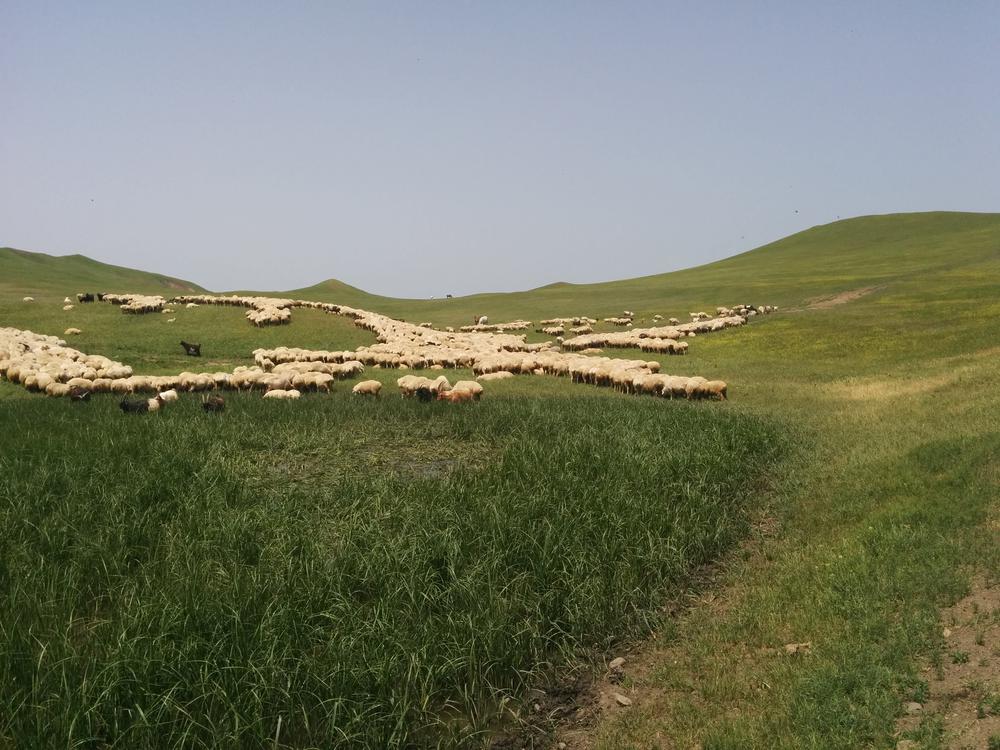
Endless sheep
The monastery itself turned out to be a fairly low-key affair: It is still operating (monks are still monking) and thus much of it is off-limits.
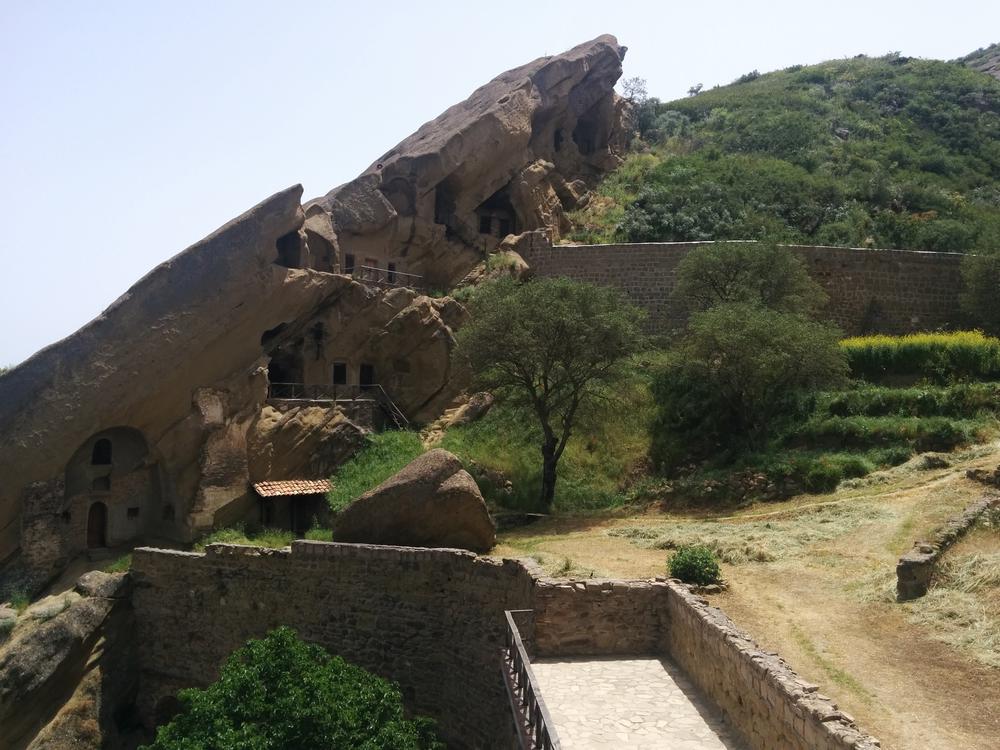
Caves dug into the side of Mount Gareja
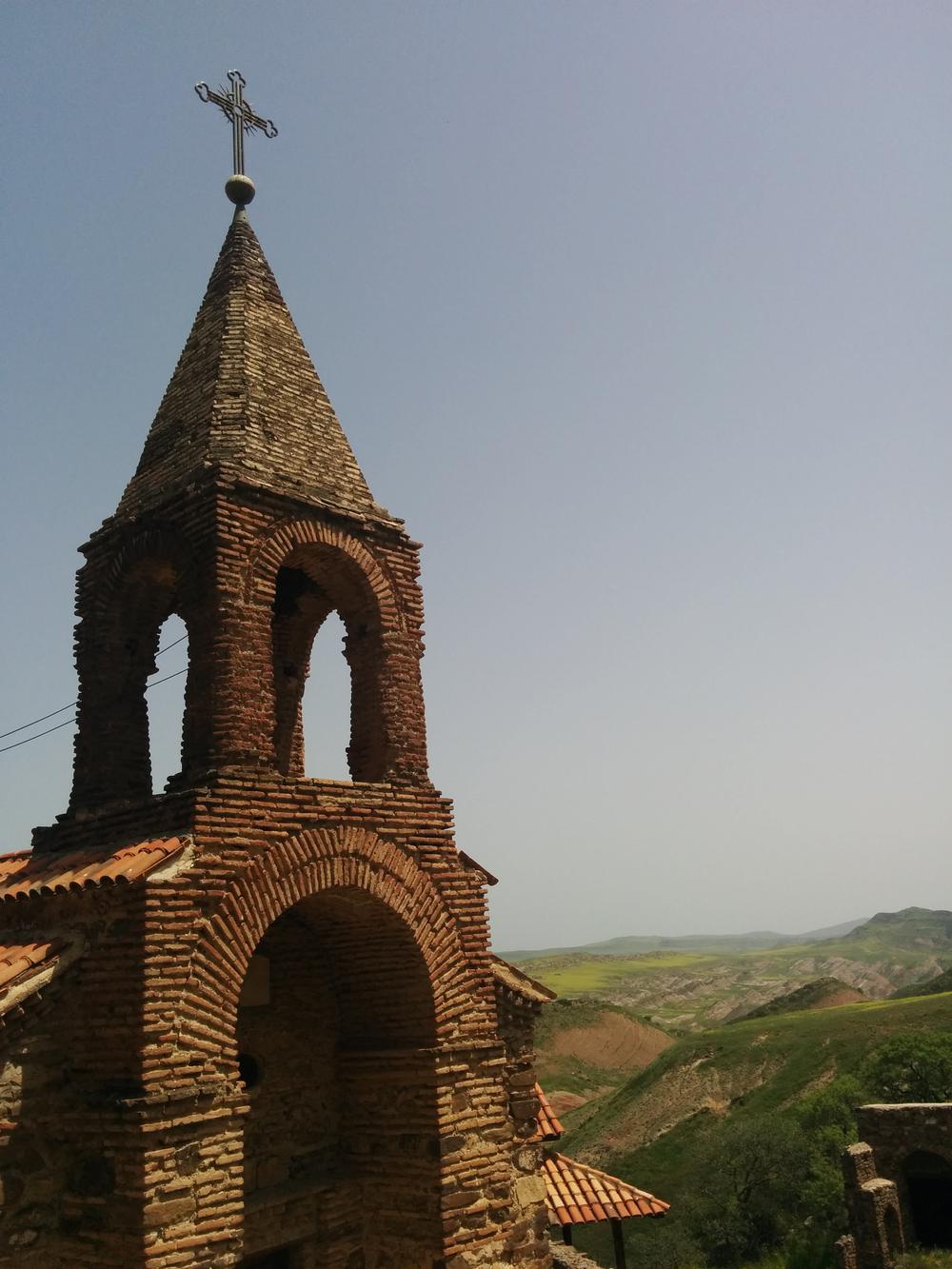
The chapel
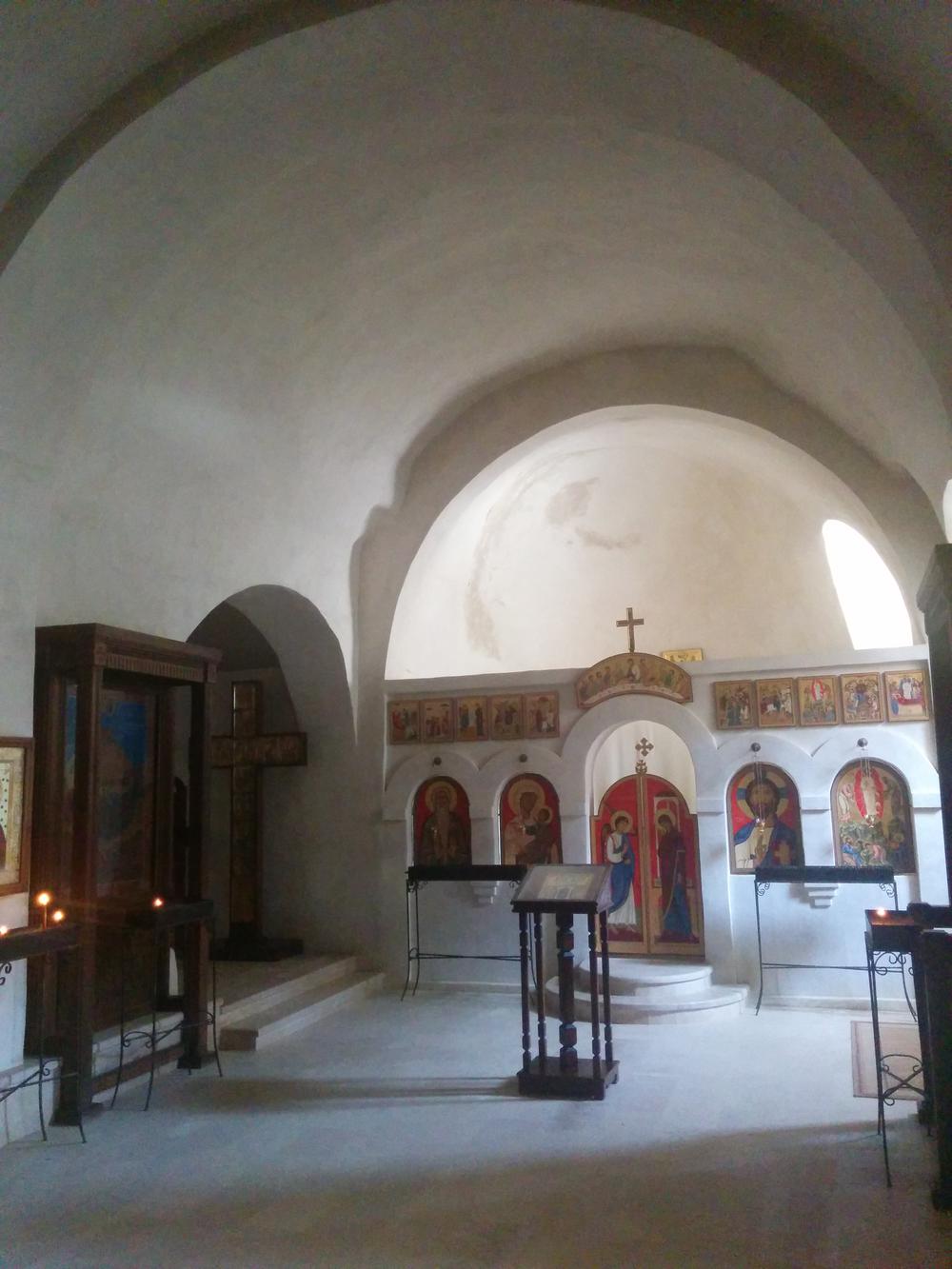
Inside the chapel
Leaving the monastery behind, we started our hike up the cliff towards the Azerbaijani border. The temperature must have hovered around 35°C and the path was baked solid by the sun. The path was also quite steep, so after a short while we were all sweat-soaked.
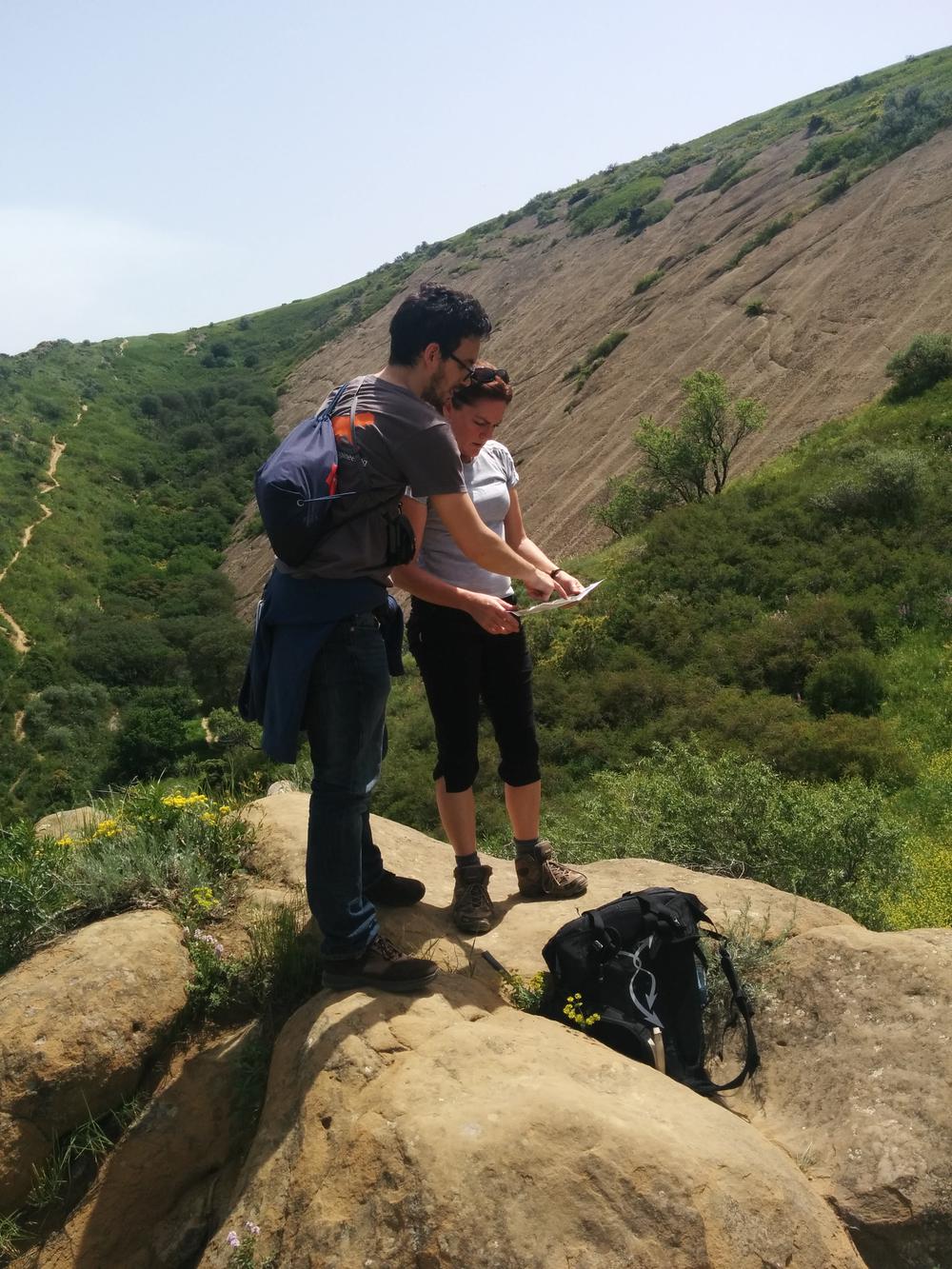
Rene and Marco figuring out the route from an A4 map provided by our driver
(Is that humming in your head the sign of an oncoming headache? You haven’t drunk enough water, clearly. And no aspirin on you. Yep, definitely a headache. One of those pulsing ones. Ka-CHOCK….Ka-CHOCK. Awesome.)
After a few hundred meters of steep ascent we reached the top of the ridge. There, sitting on a huge rock, we found two Azerbaijani soldiers on watch, who called us in on their radio. Interestingly enough, they did not check our passports or require any documents. And thus we sat foot into Azerbaijan. The view from up there was stunning:
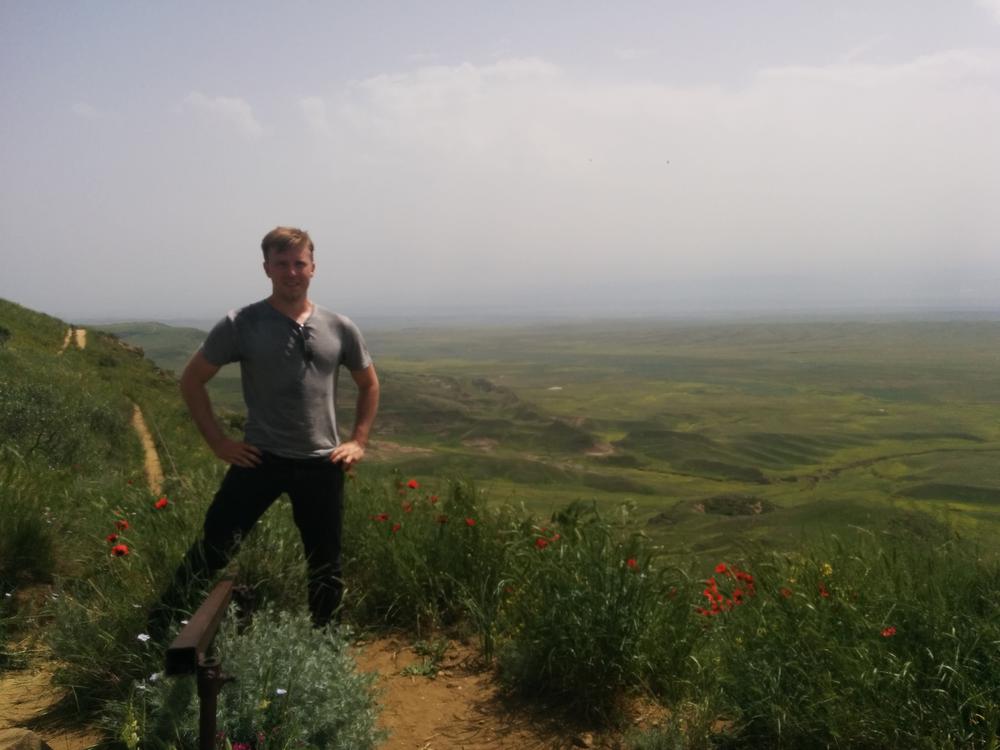
The north of Azerbaijan actually looks...
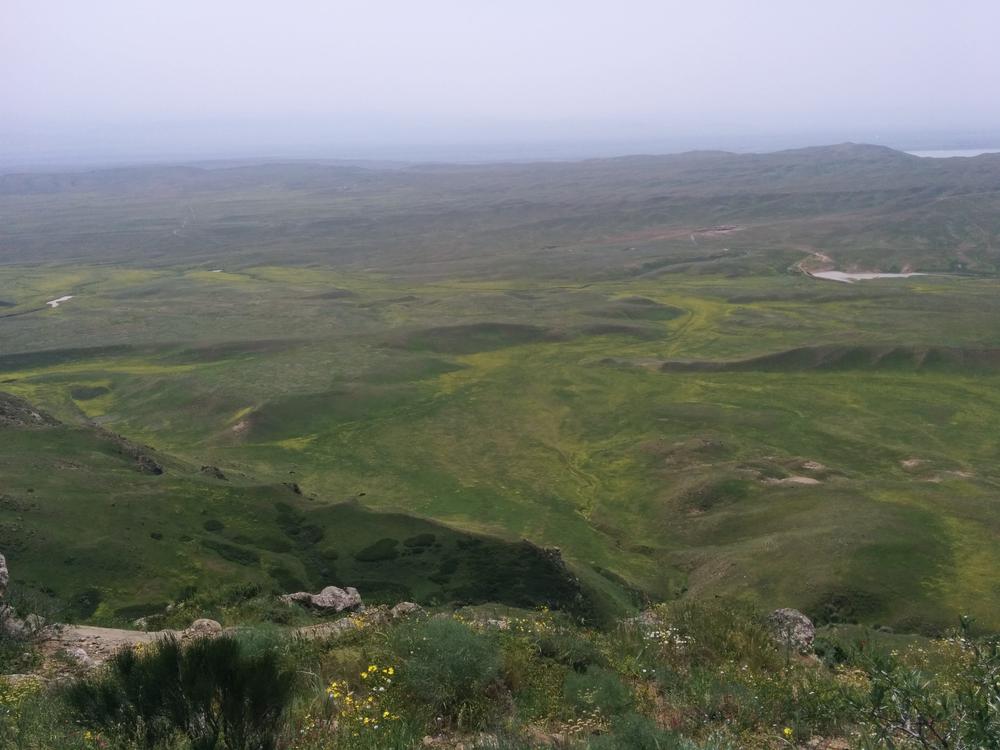
...a lot like the south of Georgia
We then followed a footpath along the ridge and found several small caves with wallpaintings and inscriptions. All of these were outlying parts of the monastery and still used as places of worship.
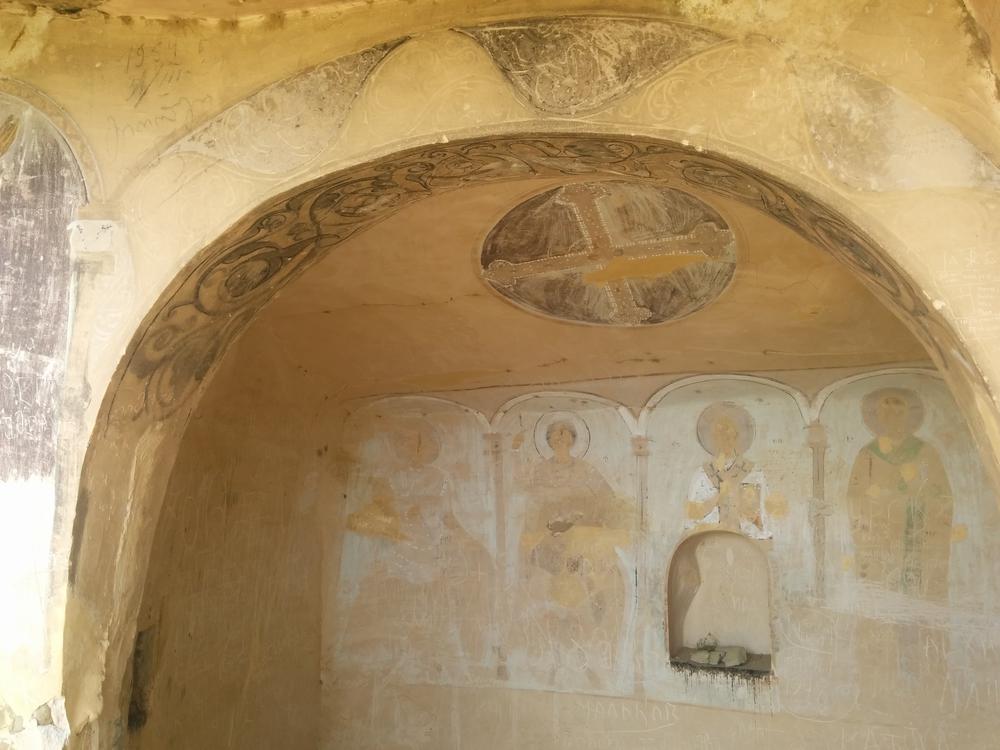
Caves along the south slope of Mount Gareja
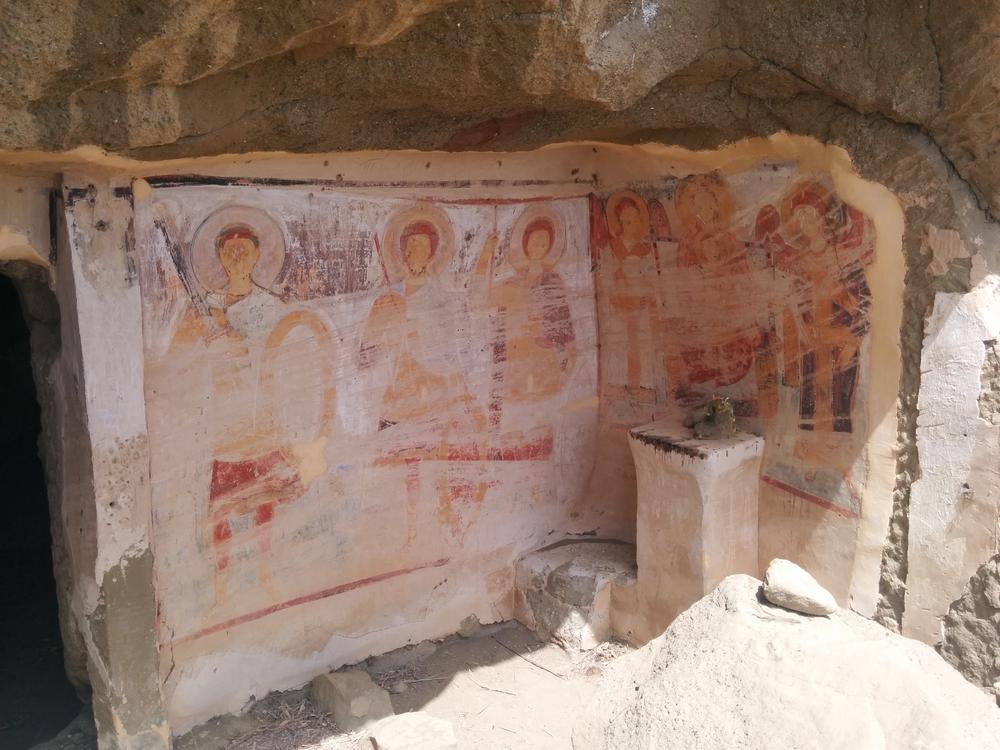
Another cave
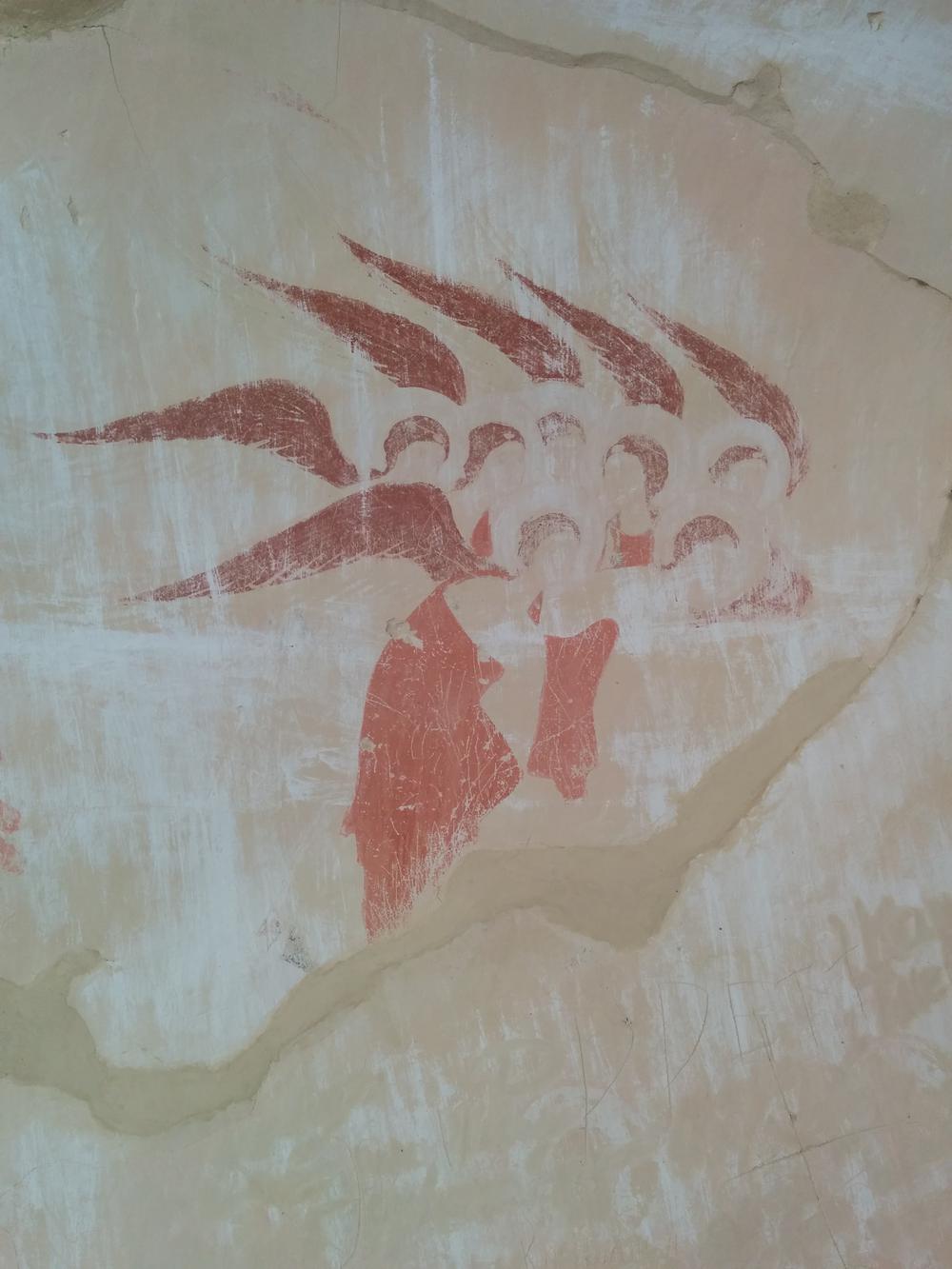
And another cave
Eventually, we made our way up to the peak of the ridge, where we checked back in with two Georgian soldiers sitting in the shade of a chapel there. We ended up spending half an hour just admiring the landscape and trying to snap a few good shots of the enormous birds of prey that circled around us:
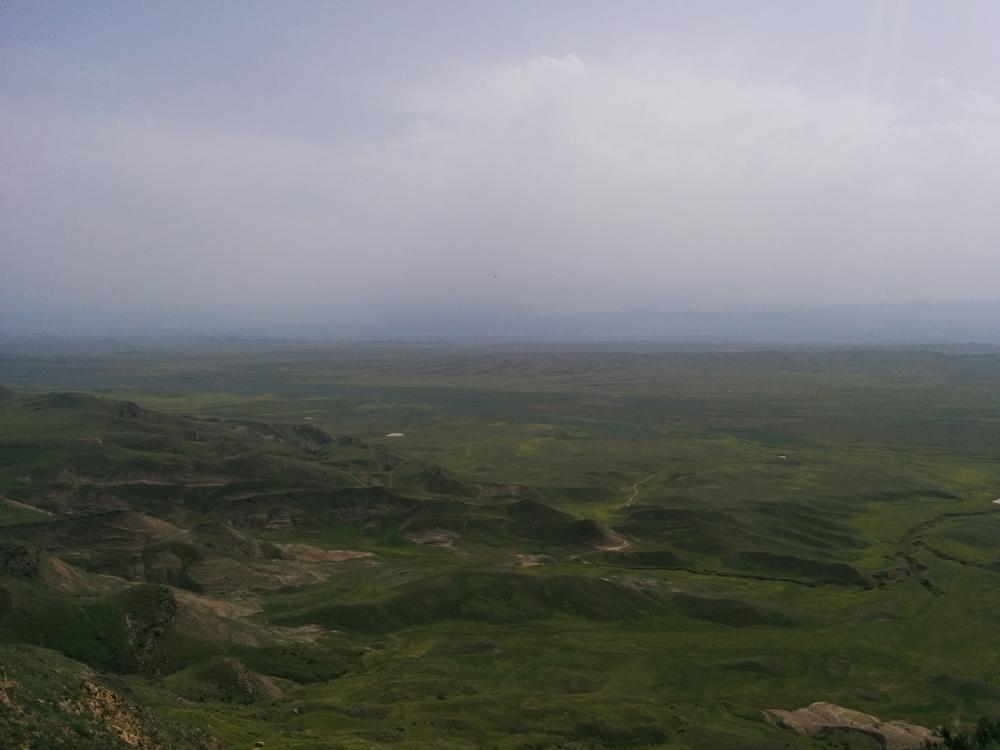
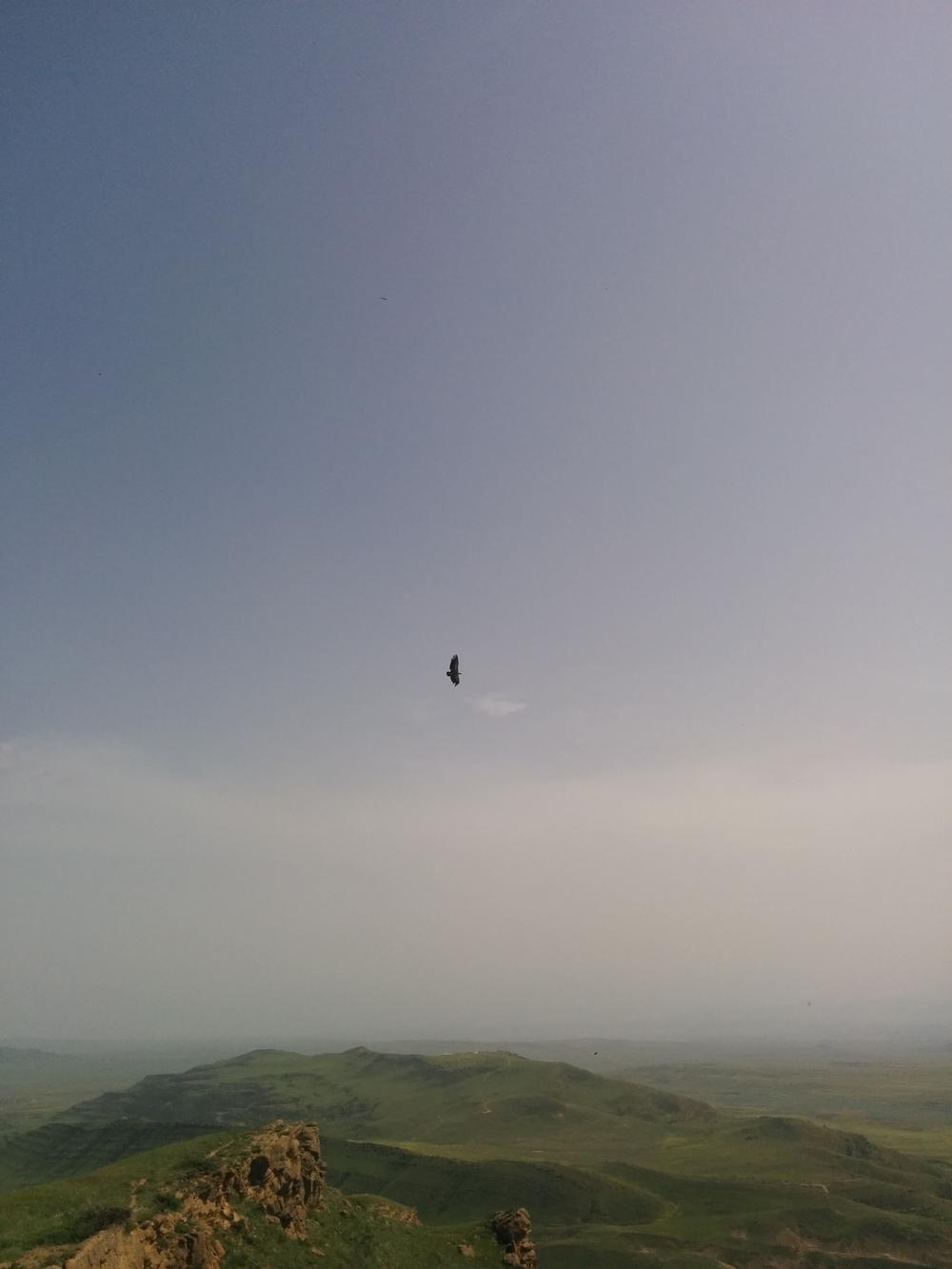
A bird!
Afterwards, we climbed down the other side of the ridge, back towards the car.
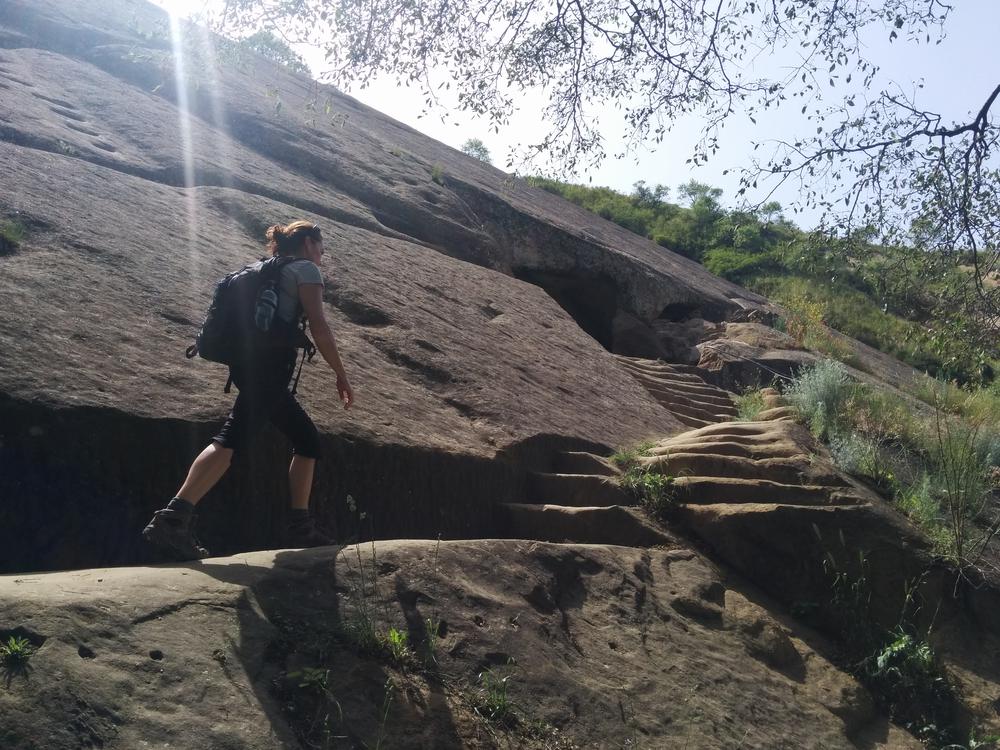
Down the north slope of Mount Gareja
On the way back, we had a lunch-stop in the town of Udabno. As these things go, the only restaurant there was operated by our driver’s parents. Their entire community had been relocated to this area after their hometown in Svaneti had been devastated by a rockslide. The Soviets had begun building a completely new town for them, when the USSR collapsed and the money ran out.
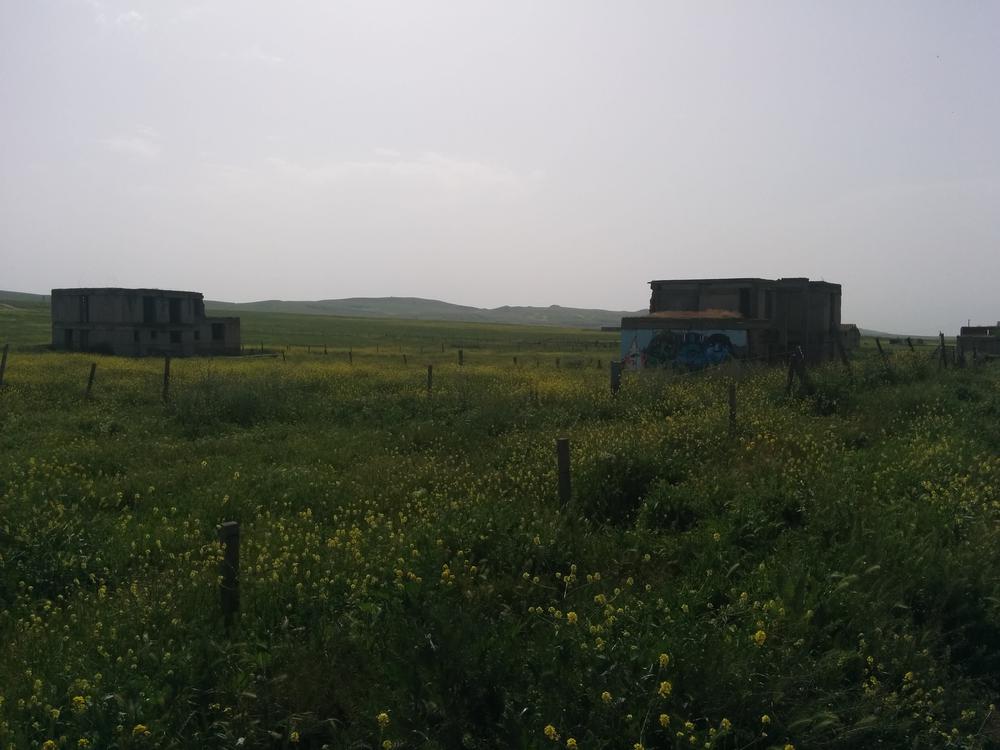
Udabno
After a quick lunch there, we all slept through the entire drive back to Tbilisi.
1300 words! On a sunday, no less! Next time: Another episode of “Wanna come?” - “Sure, why not?” with mountains, sheep and chacha - nectar of the gods and terror of mankind.
Until next time,
Arne